


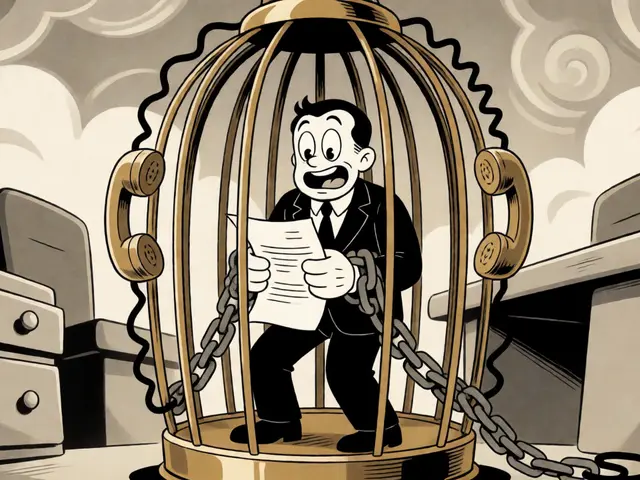
Imagine wearing a virtual jacket you bought in Decentraland, then walking into a virtual office built on NVIDIA’s Omniverse-same jacket, same identity, no re-purchase, no conversion. That’s the promise of interoperability in the metaverse. Right now, most virtual worlds are locked cages. Your avatar, your NFTs, your custom furniture-they stay put. But that’s changing fast. Interoperability isn’t just a tech buzzword. It’s the only way the metaverse survives as anything more than a collection of isolated games and demos.
Why Interoperability Isn’t Optional Anymore
Without interoperability, the metaverse stays broken. Right now, if you spend $500 on a digital watch in Roblox, you can’t wear it in Fortnite, Meta’s Horizon Worlds, or even a virtual real estate platform like The Sandbox. That’s not just inconvenient-it’s economically wasteful. Nokia’s 2023 whitepaper found that a fully interoperable metaverse could generate $5.5 trillion in value by 2030. A fragmented one? Just $1.2 trillion. That’s not a gap. That’s a massive missed opportunity. The problem isn’t just money. It’s control. When platforms lock your assets, they lock you in. That’s why the European Commission’s Digital Markets Act (DMA), enforced since March 2024, is already forcing giants like Meta and Apple to open up their messaging systems. The same logic is coming for the metaverse. By Q2 2026, EU regulators plan to extend DMA rules to virtual platforms, requiring them to allow third-party identity and asset access. If you’re building anything serious in the metaverse today, you’re not just choosing a platform-you’re choosing your future freedom.How Interoperability Actually Works (The Tech Behind It)
Interoperability doesn’t happen by magic. It’s built on layers of standards, protocols, and middleware. Here’s what’s actually going on under the hood. First, identity. You can’t move your avatar if your identity doesn’t travel with you. That’s why systems like OAuth 2.0, OpenID Connect, and SAML are being adopted. Meta X’s standard requires multi-factor authentication with at least three factors-including biometrics that hit 99.8% accuracy in Microsoft’s Azure AD tests. Your login isn’t tied to one platform anymore. It’s tied to you. Then there’s assets. A 3D chair from one world won’t load in another unless it’s in the right format. That’s where glTF 2.0 comes in. It’s the JPEG of 3D models-open, lightweight, and supported everywhere. Combine it with Draco compression, and you cut file sizes by up to 90% without losing detail. But even with the right format, assets need a unique ID. The Unified Metaverse Standards initiative created the Meta X UID System, where every object gets a globally unique number that follows it across platforms. No more guessing if your sword is the same one from last week’s meeting. For movement between blockchains (where most digital assets live), a system called bi-directional anchoring + signature verification + state locking ensures assets aren’t duplicated or stolen. Chainalysis found that when this system is fully used, cross-chain exploits drop by 98.7%. That’s not theoretical-it’s already cutting losses in real deployments. Real-time interaction is the hardest part. If you’re in a virtual meeting with someone on a different platform, your voices can’t lag, your avatars can’t teleport, and your hand gestures can’t disappear. That’s where the Multi-User Sync System (MSS) and Session Control Protocol (SCP) come in. MSS handles data sync even with 40% network loss. SCP makes sure everyone enters and exits meetings the same way-no one gets stuck in a lobby while others are already talking. NVIDIA’s tests show these systems keep latency under 150ms, even with 500 people in the same space.The Three Ways Companies Are Trying to Solve This
There are three main approaches-and each has trade-offs. The first is the walled garden. Think Roblox and Fortnite. They control everything. Stability? 98.5% uptime. User experience? Smooth, polished, predictable. But here’s the catch: 72% of user assets are locked inside. You can’t take your custom car from Roblox to another world. That’s fine for casual users, but for businesses? A non-starter. If you’re training employees in VR, you can’t afford to be stuck on one platform forever. The second is the federated partnership. This is where a few companies agree to play nice. The Blockchain Game Alliance is one example. They’ve built bilateral bridges between a handful of platforms. Interoperability coverage? Around 45%. Implementation cost? 30% lower than open models. But here’s the problem: you only get access to the platforms in the alliance. Gartner found these alliances cover just 28% of the total metaverse market. You’re trading lock-in for smaller circles of freedom. The third is the open & decentralized model. This is where standards like glTF, OpenXR, and WebXR rule. Platforms like Decentraland and Spatial.io use these to let users move assets freely. 89% of assets in Decentraland are transferable across compatible platforms. Sounds perfect, right? Not quite. It takes 47% more development time. And security? A mess. In Q1 2025 alone, $287 million was stolen through cross-chain bridges that didn’t follow the rules. Open doesn’t mean safe-it means you have to build safety in yourself.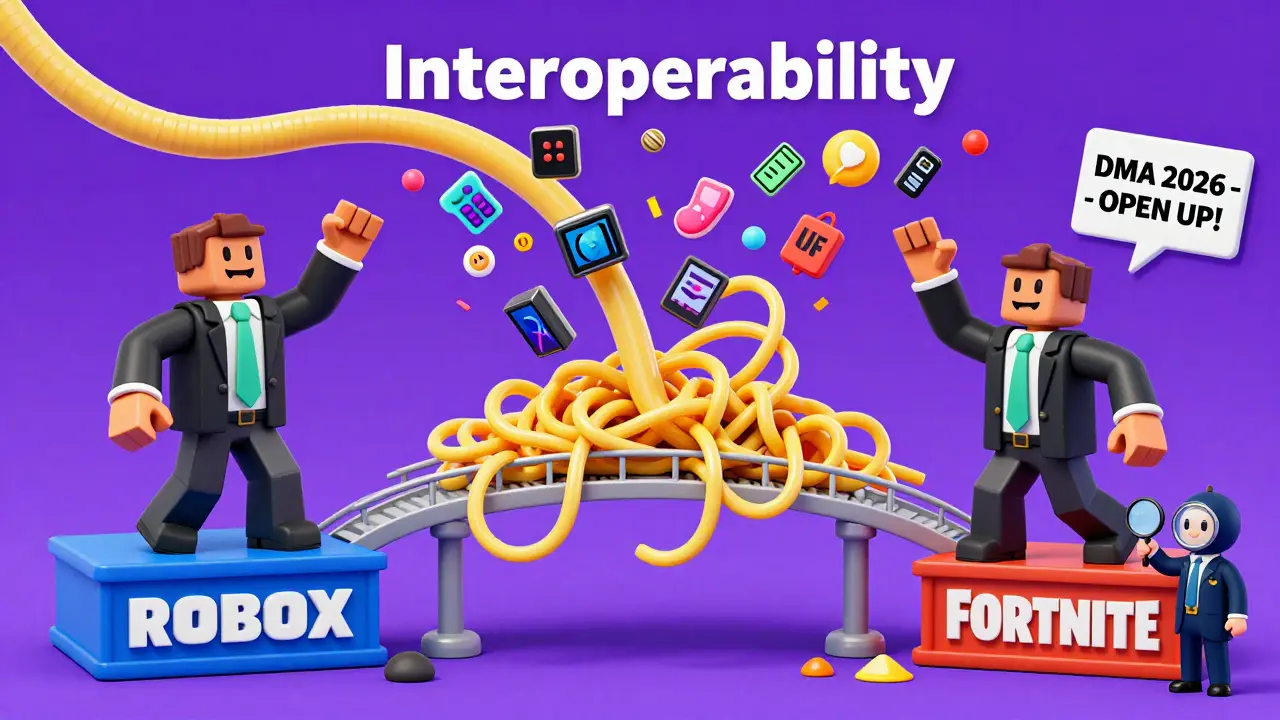
What Enterprises Are Actually Doing
Big companies aren’t waiting for the future. They’re building it. Deloitte’s 2025 Digital Reality Survey found that 68% of Fortune 500 companies are investing in metaverse projects-and 100% of them require interoperability as a baseline. Why? Because they’re connecting VR training rooms to existing ERP and CRM systems. If your sales team trains in a virtual showroom, that data needs to sync with Salesforce. If your engineers design a new product in VR, that model needs to flow into Autodesk or SolidWorks. That’s not possible without open standards. Antier Solutions’ 2026 report says 78% of enterprises prioritize interoperability to avoid vendor lock-in. But 65% still struggle with “format translation hell”-spending an average of 147 hours just to get one asset working across two platforms. The fix? Start with glTF. iXie Gaming’s CTO says using glTF for 3D models alone cuts future integration costs by 83%. You don’t need full interoperability on day one. You just need to make your assets ready for it.The Real Barriers (And How to Overcome Them)
Even with all the progress, three things still break interoperability:- Real-time sync (76% of developers cite this as the biggest headache)
- Asset format conversion (68%)
- Identity conflicts (59%)
What’s Coming Next
The pace is accelerating. In March 2026, the Unified Metaverse Standards will release version 3.0-adding AI-powered translation layers that automatically convert assets between incompatible formats in real time. Think of it like Google Translate for 3D objects. Meanwhile, the Metaverse Standards Forum’s “Project Atlas” is building a universal coordinate system. Right now, if you walk 10 meters in Decentraland, you might end up in a completely different space in another world. Project Atlas will make sure “10 meters” means the same thing everywhere. And IEEE’s new P2145 standard-finalized in January 2026-will introduce certification tests with 97 specific scenarios. If a platform passes, it gets a badge: “Interoperable by IEEE.” That’s the first time there’s a real, verifiable label for interoperability.The Bottom Line
Interoperability isn’t about making the metaverse look prettier. It’s about making it usable. Real. Scalable. The companies that succeed won’t be the ones with the flashiest graphics. They’ll be the ones who built bridges. By 2028, 89% of analysts predict interoperability will be mandatory for enterprise metaverse solutions. The market is already shifting: interoperable platforms command 38% of the $62.1 billion metaverse market in 2025. Proprietary ones? Just 29%. The rest are fading. If you’re building something in the metaverse today, ask yourself: Are you building a castle-or a doorway?What does interoperability mean in the metaverse?
Interoperability in the metaverse means your digital identity, assets (like clothing or tools), and experiences can move freely between different virtual platforms without needing to be recreated or repurchased. It’s like having a passport that works in every country, not just one.
Why is cross-platform compatibility important for businesses?
Businesses need interoperability to avoid vendor lock-in, reduce long-term costs, and connect virtual experiences with real-world systems like CRM, ERP, and training platforms. Without it, companies risk wasting money on tools that can’t scale or integrate. Deloitte found 68% of Fortune 500 companies now require interoperability in their metaverse investments for this reason.
Can I use my Roblox items in Decentraland?
Not right now. Roblox uses a closed system, and its assets are locked to its platform. Decentraland uses open standards like glTF and blockchain-based IDs, which allow transferability-but only between compatible platforms. Until Roblox opens its system or a bridge is built, your items stay put.
What are the biggest technical challenges to interoperability?
The top three are real-time synchronization across platforms, converting assets between different 3D formats, and managing identity conflicts. Developers also struggle with inconsistent documentation and lack of security standards. Solutions like protocol middleware and standardized formats (glTF, OpenXR) are helping, but full compatibility is still a work in progress.
Is the metaverse regulated for interoperability?
Yes, increasingly so. The EU’s Digital Markets Act (DMA), enforced since March 2024, already requires gatekeepers like Meta and Apple to allow third-party access to messaging services. By Q2 2026, these rules are expected to expand to metaverse platforms. The U.S. FTC has also issued guidelines requiring “reasonable and non-discriminatory access” to APIs, signaling that interoperability is becoming a legal expectation, not just a technical goal.
What should I do first if I want to build an interoperable metaverse experience?
Start by using open standards for your assets. Use glTF 2.0 for 3D models, OpenXR for VR/AR interactions, and WebXR for browser-based access. Even if you’re not ready for full cross-platform support yet, these formats make your assets future-proof. They’ll cut your integration costs by 83% when you’re ready to expand. Also, avoid proprietary formats and lock-in systems unless you’re sure you’ll never leave that platform.



Karl Fisher
31 Jan 2026 at 12:27Look, if you're still using Roblox assets like they're sacred relics from the pre-web3 dark ages, you're not building the metaverse-you're just redecorating a digital attic. glTF 2.0 isn't a suggestion, it's the bare minimum. I saw a startup last week port a 12MB FBX chair into a WebXR space using Draco compression and it loaded in 0.8 seconds. Meanwhile, some 'enterprise solutions' are still wrestling with COLLADA files like it's 2013. We're not talking about minor tweaks here. We're talking about architectural rebellion. If your platform can't handle a universally identifiable asset with a Meta X UID, you're not a platform-you're a gated garden with a fancy sign.
And don't get me started on identity. OAuth 2.0? Cute. We're talking biometric multi-factor auth with Azure AD-level accuracy. If your avatar logs in with a password, you're not interoperable-you're just borrowing someone else's future.
Stop romanticizing walled gardens. They're not safe. They're just lazy. The EU’s DMA isn't a threat-it's a wake-up call. The future isn't about who has the prettiest graphics. It's about who lets you walk out the door with your stuff.
And yes, I've lost $12k in a sketchy cross-chain bridge. But I'm not blaming the tech. I'm blaming the people who thought 'open' meant 'trust me bro.'