

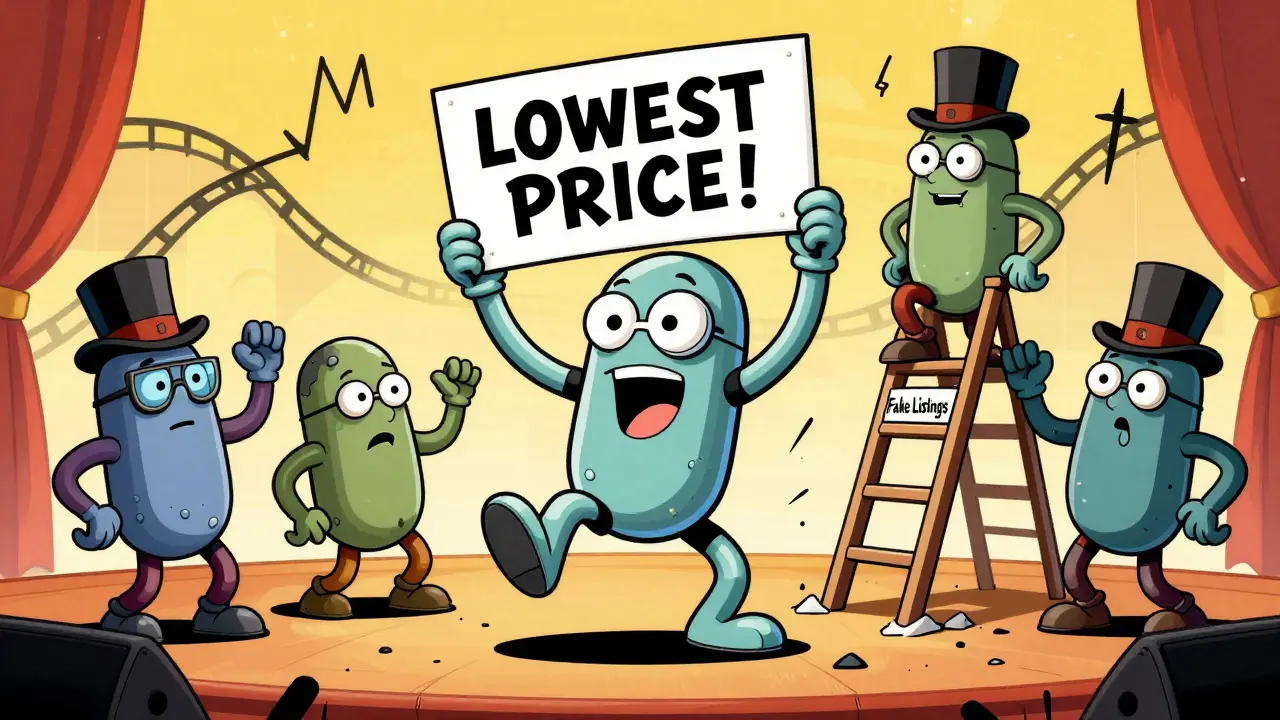

The NFT market isn't just about owning a digital image. It's about floor price - the lowest price you can buy any single NFT in a collection right now. This number tells you more than you think. It’s the heartbeat of a collection’s market health, the first thing serious buyers check, and the metric that separates real demand from hype. If you’re trying to understand why some NFTs are worth thousands while others are worthless, floor price is where you start.
What Floor Price Really Means
Floor price isn’t the average price. It’s not the highest sale. It’s the cheapest available NFT in a collection that you can buy immediately - no bidding, no waiting. On OpenSea, Blur, or Magic Eden, it’s the lowest listed price for any token in that group. This number changes every minute as people list, delist, or buy. A rising floor usually means more buyers are entering. A falling floor? That’s a warning sign.
Platforms like CoinGecko and NFTPriceFloor.com track this data across 1,752 NFT collections on Ethereum, Solana, Bitcoin, and other chains. But not all floor prices are equal. Some are real. Others are faked. Wash trading - where the same person buys and sells their own NFT to inflate the price - is still common. That’s why you can’t just look at the number. You need to see how many actual sales happened in the last 24 hours. If the floor jumps 50% but only three NFTs sold, it’s probably rigged.
Bored Ape Yacht Club: The Gold Standard
As of December 2025, Bored Ape Yacht Club (BAYC) sits at a floor price of $39,320. That’s up from its original mint price of $26.42 - a 148,736% gain. Why does it still hold this value when newer collections have flashier art and bigger marketing teams? Because BAYC isn’t just an NFT. It’s a brand. It’s a membership. It’s access to exclusive events, merchandise, and the Otherside metaverse project. Even though Otherside hasn’t delivered everything promised, the community trust remains strong. Over 13,000 unique wallets hold BAYC NFTs. That’s a wide, deep holder base, not controlled by a few whales.
Compare that to a collection like Forgotten Runes Wizards Cult. Its floor price rose 5.7% in 24 hours to $718.46, but over the last 30 days, it only grew 7.5%. That’s stagnation. The price might look stable, but the momentum is gone. BAYC’s floor price doesn’t just reflect demand - it reflects legacy, utility, and community trust.
New Contenders: Captainz and the Rise of Solana
Not all top floor prices belong to old giants. Captainz, a newer collection on Ethereum, sits at $10,783.58 as of December 2025. That’s over $100 million in total market value. What makes it different? It has real volume. Around 27.73 ETH worth of Captainz NFTs trade every 24 hours. That’s not fake volume. That’s people actually buying and selling. It also has 3,990 unique holders - nearly 40% of its 9,999 supply. That’s healthy distribution. No single wallet owns more than 1% of the collection. That’s rare.
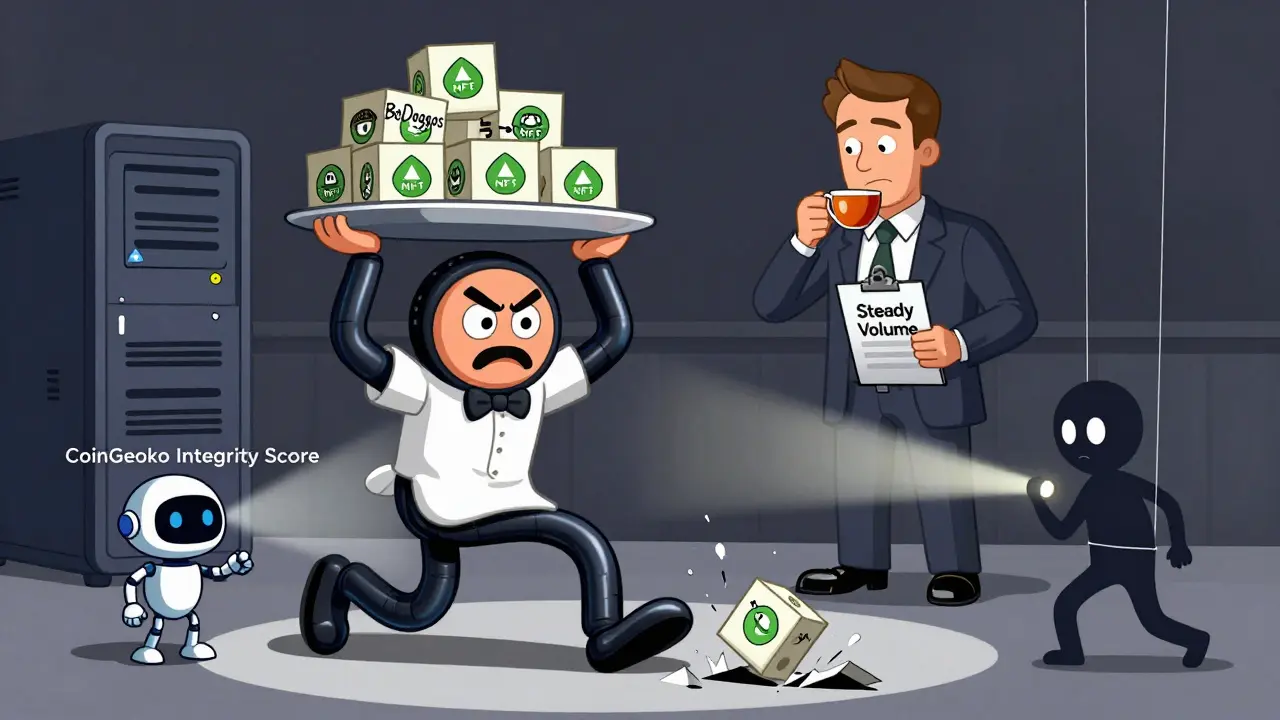
On Solana, BoDoggos exploded in December 2025 with a 62.9% 24-hour floor price jump to $771.82. But here’s the catch: within 48 hours, it dropped 35%. Why? Solana’s network has a history of congestion. When the chain slows down, traders panic and sell. A 183.6% monthly gain sounds amazing - until you realize it’s tied to a blockchain that’s still unstable. This isn’t sustainable growth. It’s volatility dressed up as momentum.
Bitcoin Ordinals: The Quiet High-Value Player
Most people think NFTs are all on Ethereum. But Bitcoin Ordinals changed that. Bitcoin Puppets, one of the top three Ordinals collections, has a floor price of 0.15 BTC - roughly $11,250. That’s higher than most Ethereum collections outside the top 20. Why? Because Bitcoin has a different kind of value. It’s seen as the most secure, longest-running blockchain. Owning an NFT on Bitcoin isn’t just a digital collectible - it’s a statement. It’s proof you can hold something valuable on the original crypto network. That appeals to a specific, hardcore group of believers. Their demand keeps the floor high, even with lower trading volume.
The Dark Side: Manipulation and False Signals
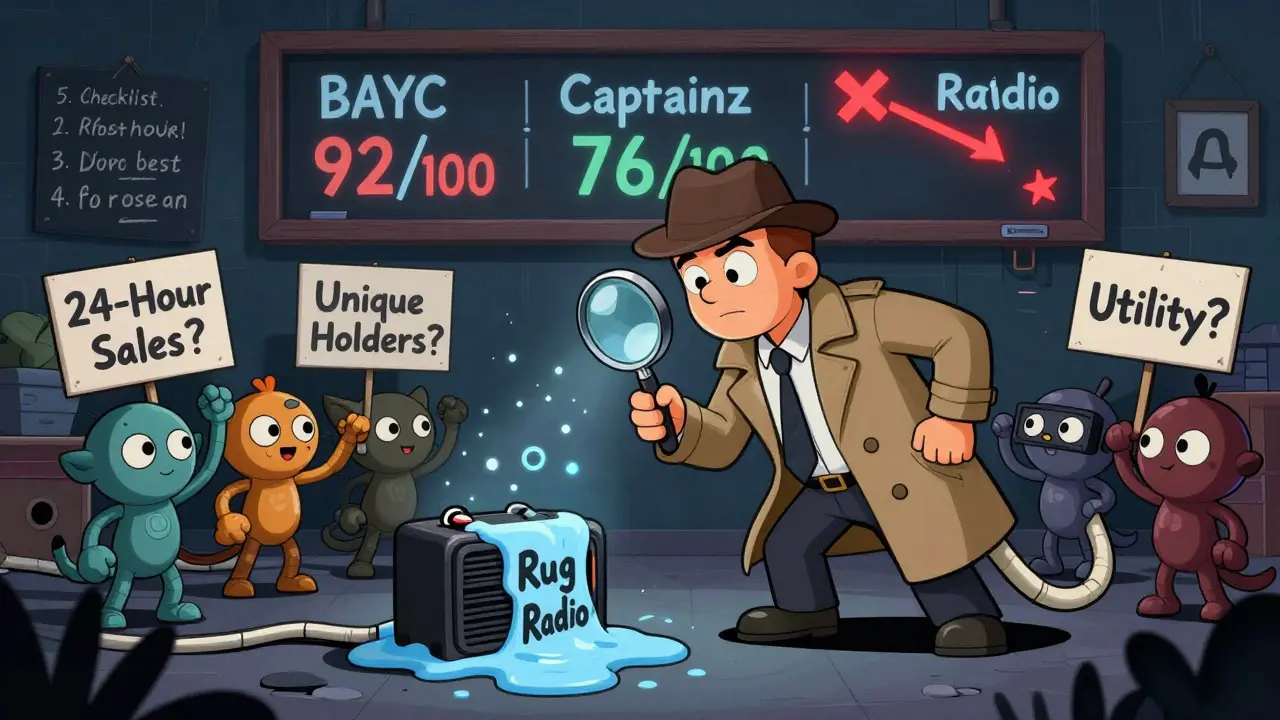
Floor price is a powerful tool - but it’s also easy to game. In December 2025, Rug Radio - Genesis NFT saw its floor price jump 23.5% to $340.59. But Etherscan showed only 15 actual sales in that same period. The rest? Fake listings. Within 72 hours, the price crashed 38%. That’s a classic pump-and-dump. Projects sometimes pay bots or insiders to list NFTs at low prices, then buy them back to create the illusion of demand. CoinGecko’s new “Floor Price Integrity Score” tries to catch this. BAYC scored 92/100. Captainz got 76/100. Rug Radio? It didn’t even make the list.
Another red flag? When the floor price is identical across every marketplace. That’s not normal. Legitimate NFTs have slight price differences between platforms due to fees, liquidity, and timing. If every exchange shows the same floor price - especially for a newer collection - it’s likely being artificially stabilized. NFTPriceFloor.com’s smart contract verification cut fake listings by 78% in November 2025. But free tools still miss a lot.
How to Use Floor Price Wisely
Don’t buy based on floor price alone. Here’s what to check instead:
- 24-hour sales volume - Is it rising? Or flat? Low volume with a high floor = danger.
- Number of unique holders - Are 10 people holding 80% of the collection? That’s risky.
- Chain stability - Solana NFTs can crash during network outages. Ethereum is slower but steadier.
- Utility roadmap - Does the team have real plans? BAYC survives because of Otherside. Captainz survives because of active community events.
- Price gap - If the second-cheapest NFT is 20% higher than the floor, someone’s artificially holding the price.
Professional traders spend 6-8 months learning to read these signals. Beginners often lose money chasing the highest floor. The smartest move? Buy when the floor is falling, volume is low, and no one’s talking about it - then wait for the real demand to return.
The Future of NFT Valuation
Floor price won’t disappear. But it’s evolving. CoinMarketCap plans to add real-time manipulation detection in early 2026. NFTPriceFloor.com is working on a universal standard across 15 blockchains by March 2026. Meanwhile, institutions like Deloitte report that only 2.4% of Fortune 500 companies use floor price in their NFT strategy - they’re waiting for better metrics.
Some analysts believe floor price will become obsolete by 2027, replaced by utility-based models. Imagine an NFT that gives you real-world discounts, access to concerts, or royalties from future sales. That’s the next step. But for now, floor price is still the language of the market. Understand it, respect it, but never trust it blindly.
What’s Next for NFT Collectors
If you’re just starting, focus on collections with:
- Consistent 24-hour volume over $10,000
- At least 2,000 unique holders
- Clear utility (not just art)
- Low concentration of ownership (no single wallet has more than 5%)
- History of real sales, not just listed prices
Follow trusted analysts like @NFTDetective on Twitter. Join Discord servers like “Floor Price Watchers” - but verify every alert. Most fake floor breaks are just bots.
The NFT market is still young. It’s wild. It’s risky. But for those who learn to read the signals - not just the numbers - there’s still real opportunity. Floor price isn’t the whole story. But if you ignore it, you’re already behind.
What is the floor price of an NFT collection?
The floor price is the lowest listed price for any NFT in a collection that you can buy immediately. It’s not the average or the highest sale - it’s the cheapest available option on marketplaces like OpenSea or Magic Eden. This number changes constantly as people list or sell NFTs.
Why is Bored Ape Yacht Club’s floor price so high?
BAYC’s floor price remains high because it’s more than just art - it’s a brand with utility. Holders get access to exclusive events, merchandise, and the Otherside metaverse. It also has strong community trust, wide holder distribution (over 13,000 wallets), and years of proven demand. Even though its original mint price was under $30, its value has grown over 148,000% since 2021.
Can floor price be manipulated?
Yes. Projects or insiders can use wash trading - buying and selling their own NFTs - to artificially raise the floor price. They might list dozens of fake NFTs at low prices, then buy them back to create the illusion of demand. Without checking actual sales volume or holder distribution, you can be misled. Tools like CoinGecko’s Floor Price Integrity Score help spot these manipulations.
Is a rising floor price always a good sign?
Not always. A floor price can spike due to hype, bots, or coordinated buying before a major announcement. If the 24-hour sales volume is low or there are only a few transactions, the rise is likely artificial. Real growth comes with consistent volume, increasing holder count, and utility updates - not just a price jump.
Should I buy NFTs based only on floor price?
No. Floor price is just one metric. You should also check 24-hour sales volume, number of unique holders, the collection’s roadmap, and whether ownership is concentrated in a few wallets. A high floor with low volume and few holders is a red flag. Look for collections with steady demand, real utility, and healthy distribution.
Which blockchain has the most valuable NFT collections?
Ethereum still leads in high-value NFT collections, with 52 of the top 100 collections by floor price as of December 2025. Solana has 21, including popular ones like Mad Lads and BoDoggos, but its volatility makes it riskier. Bitcoin Ordinals like Bitcoin Puppets show surprising strength with a $11,250 floor price, proving value exists outside Ethereum. Each chain has trade-offs: Ethereum is stable but expensive, Solana is fast but fragile, Bitcoin is secure but slow.







Seraphina Nero
16 Dec 2025 at 01:22Honestly, I just look at the art and if it makes me feel something. Floor price feels like gambling with spreadsheets.