

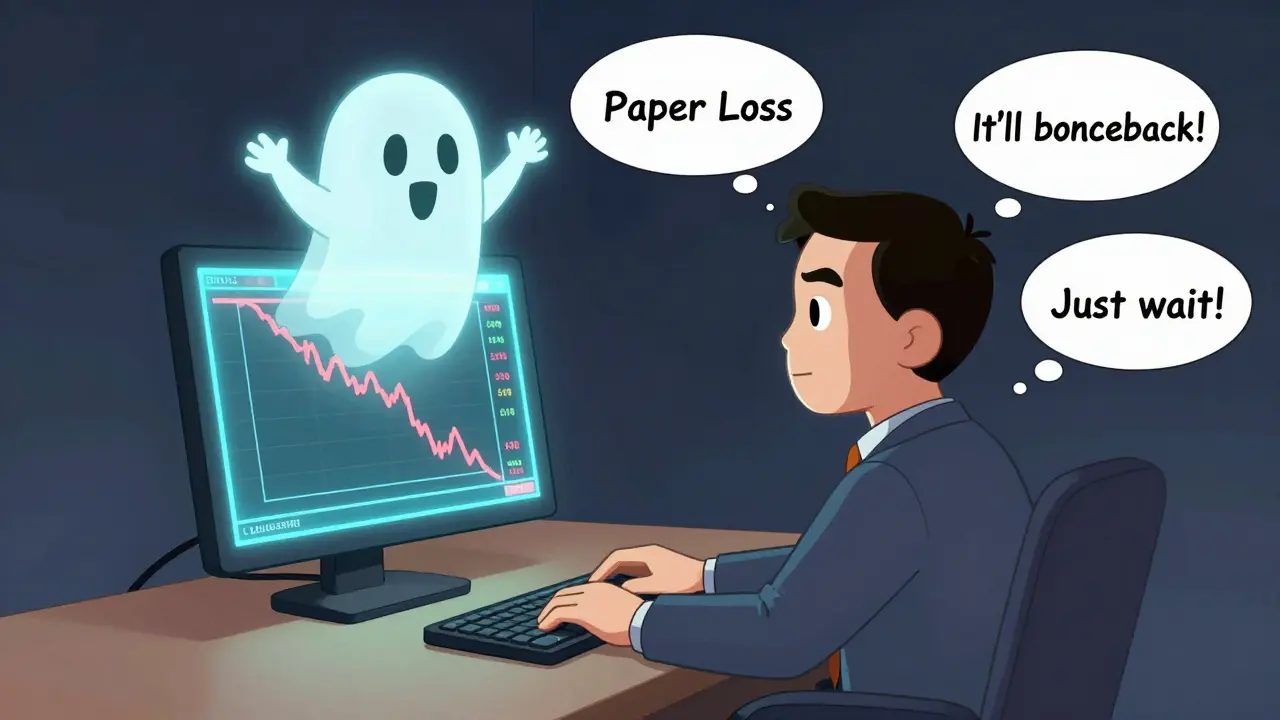

You check your portfolio. Your stock dropped 20%. It’s not gone - not yet. It’s still there, just lower on the screen. You tell yourself, It’ll bounce back. You don’t sell. You hold on. That’s a paper loss.
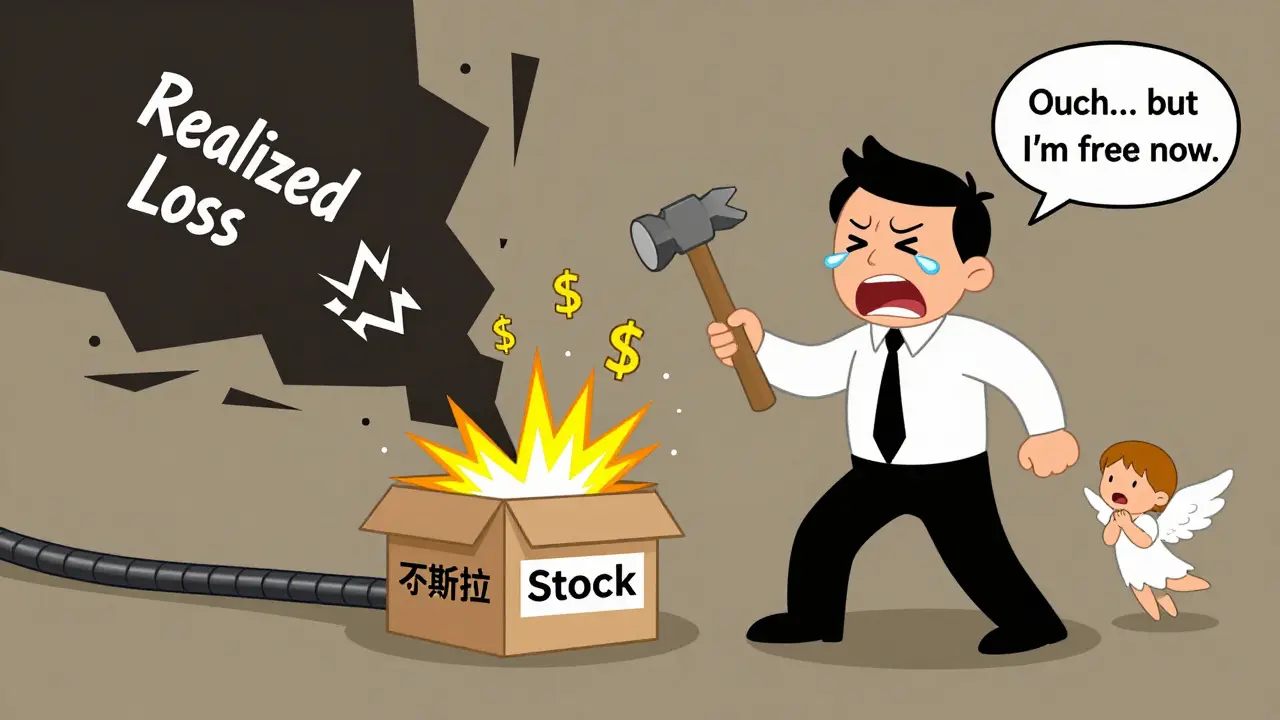
A week later, you sell. You take the hit. You feel it - a sharp sting in your chest. That’s a realized loss. Same amount of money gone. Same number on your statement. But your brain reacts completely differently.
Here’s the truth most traders never face: paper losses and realized losses don’t just look different - they make you behave differently. And those differences can cost you real money.
What’s the Difference? (And Why It Matters)
A paper loss is a ghost. It’s a number on your screen that says, “Your investment is worth less than what you paid.” But you haven’t done anything. You didn’t cash out. You didn’t move a dollar. The loss is still floating - waiting. It’s not real until you make it real.
A realized loss happens when you sell. That’s when the money leaves your account. The transaction is done. The loss is final. Accounting rules treat them differently - paper losses show up in equity, realized losses hit your income statement. But none of that matters to your brain. What matters is this: one feels like a temporary setback. The other feels like a defeat.
Here’s the twist: paper losses hurt less - but they make you take more risk. Realized losses hurt more - and they make you play it safe.
The Mental Account Trap
Think of your money as being stored in little mental boxes. One box is for your Tesla stock. Another for your S&P 500 fund. When you buy, you open the box. When you sell, you close it.
Psychologists call this mental accounting. And it’s why paper losses are so dangerous. If your Tesla stock drops 30%, your mental box for that investment is still open. Your brain clings to the idea that it can still recover. You tell yourself, “I’ll wait until it gets back to even.”
But when you sell? The box slams shut. You feel the loss. Hard. And your brain says, “I’ve been burned. I need to be careful.”
That’s why research by Alex Imas shows something shocking: after a paper loss, traders take on more risk. After a realized loss, they take less. Even if the dollar amount is identical.
It’s not logic. It’s emotion. And it’s why you end up doubling down on a losing trade after a paper loss - hoping to “get even.”
Loss Chasing: The Hidden Cost of Hope
Loss chasing isn’t just a bad habit. It’s a psychological pattern. And paper losses fuel it.
You buy $10,000 of Bitcoin. It drops to $7,000. Paper loss: $3,000. You don’t sell. You watch. You tell yourself, “I just need it to go back to $8,000.” Then you add another $5,000. Now you’re down $8,000 total. Still not selling. Why? Because if you sell now, you lock in the loss. But if you hold… maybe it turns.
That’s the trap. You’re not trying to make money anymore. You’re trying to undo a loss. And that’s not investing - that’s gambling with your own emotions.
Imas’s studies show this clearly: when losses are paper, traders take on more risk than they originally planned. When losses are realized, they stick closer to their original strategy. The difference? Control. Paper losses let you pretend you’re still in charge. Realized losses force you to face reality.
And in markets, pretending works - until it doesn’t.
Why Realized Losses Feel Worse (Even When They’re Better)
It sounds backwards: why would a loss that’s already happened hurt more than one that’s still hanging around?
Because closure is painful. Closing a mental account means admitting you were wrong. It means saying, “I made a mistake.” And humans hate that.
But here’s the secret: realized losses are often the smarter move. Why? Because they stop you from making worse mistakes.
After a realized loss, you’re more likely to pause. Reassess. Wait. That’s not fear - that’s discipline. You’ve paid the price. Now you’re not tempted to throw good money after bad.
With paper losses? You’re still in the game. You’re still risking more. You’re still hoping. And that’s where traders lose big.
Real-Life Consequences
Imagine two traders. Both bought the same tech stock at $150. It drops to $90.
Trader A holds. Paper loss: $60 per share. They see the drop every day. They feel anxious. They buy more to average down. The stock drops to $60. They’re now down 60%. They can’t bring themselves to sell. Two years later, the stock is at $45. They finally sell - losing $105 per share.
Trader B sells at $90. Realized loss: $60 per share. They feel awful. But they step back. They review their strategy. They wait. Six months later, they re-enter the market at $75 - with a clear plan. They make money on the next trade.
Same starting point. Same loss. Different outcomes. Because one let emotion drive decisions. The other let closure reset them.
How to Fight Back
Here’s what works:
- Set rules before you trade. Decide in advance: “If this stock drops 20%, I sell.” Not “if I feel like it.”
- Check your portfolio less. Seeing paper losses daily keeps your mental accounts open. Weekly checks are enough.
- Use automatic rebalancing. If your broker lets you set rules to sell or buy based on percentages, use them. It removes emotion from timing.
- Separate tax strategy from emotional response. Realized losses can help you save on taxes. But don’t sell just to get a tax break. Sell because your original reason for buying is gone.
- Ask yourself: “Would I buy this today?” If the answer is no, you already know what to do.
Trading isn’t about being right. It’s about not letting your emotions make decisions for you.
The Bigger Picture
Markets go up. Markets go down. Paper losses are normal. Realized losses are part of the game. The problem isn’t the loss. It’s how you react.
Most traders think they’re managing money. But they’re really managing their feelings.
Realized losses hurt - but they stop you from making bigger mistakes.
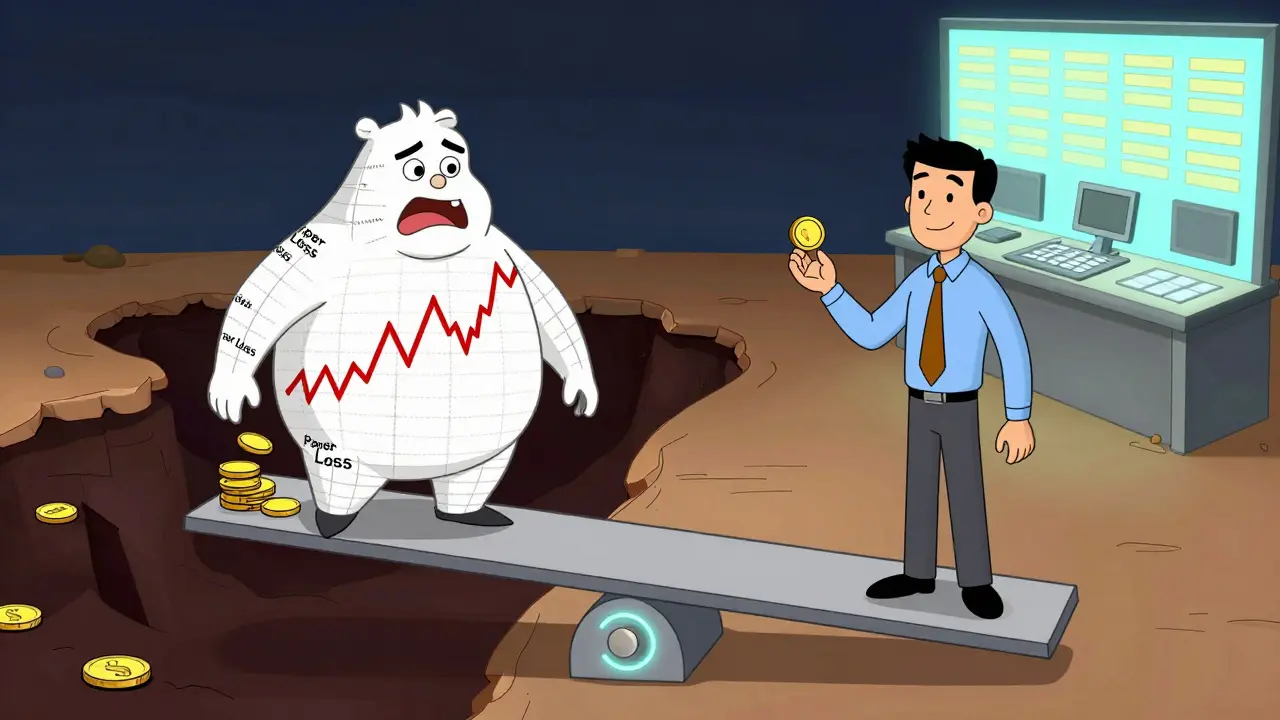
Paper losses feel safer - but they lure you into deeper holes.
There’s no magic fix. But there is awareness. And awareness is the first step to taking control.
Next time you see a paper loss, don’t just look at the number. Ask: Is this a signal - or a trap?





mani kandan
14 Mar 2026 at 13:29The way paper losses linger like a ghost in your portfolio is both poetic and terrifying. I’ve watched friends turn $20k into $8k and still refuse to sell, whispering to their screens like they’re bargaining with fate. It’s not about the money-it’s about the ego that refuses to close the tab. I once held a crypto position for 18 months because I couldn’t admit I was wrong. When I finally sold, I cried. Not because I lost, but because I realized I’d been running from myself the whole time.
Now I check my portfolio once a week. No daily panic. No mental accounting. Just data. And surprisingly, my returns improved. Sometimes, the bravest trade is the one you don’t make.