

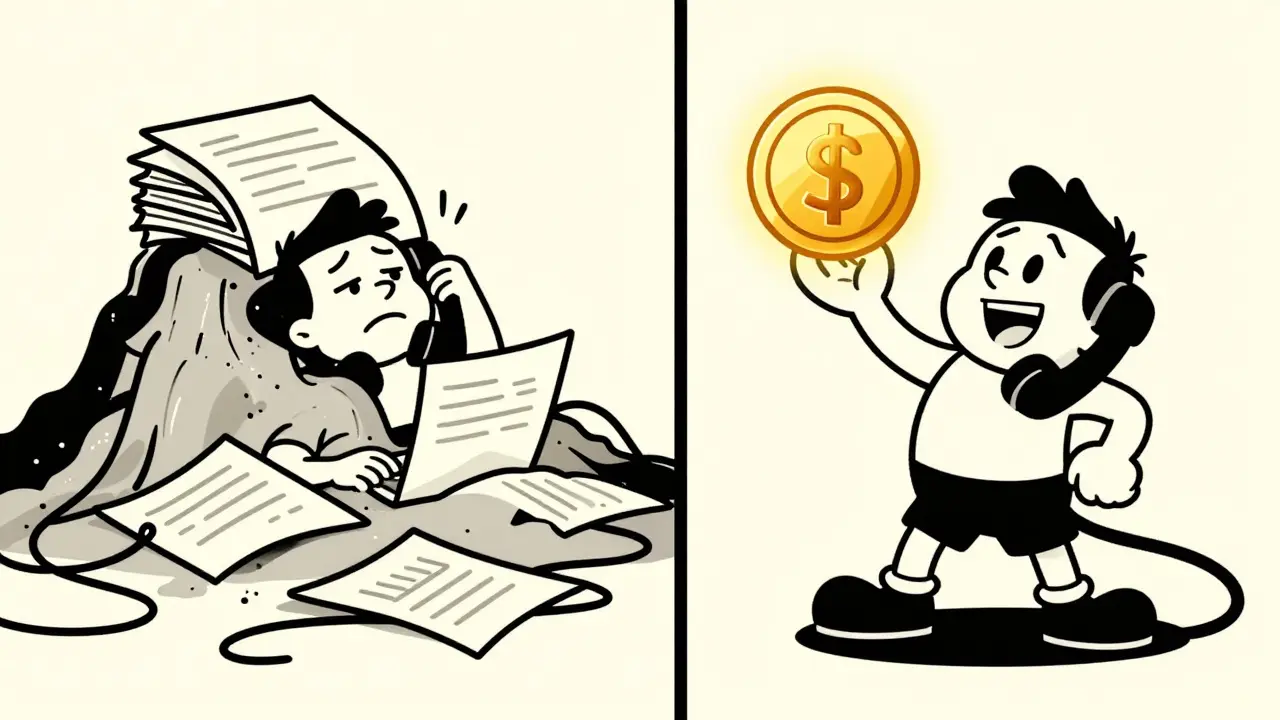

Traditional insurance is reactive. You suffer a loss, you report it, and then you wait for a human to decide if your claim is valid. Parametric insurance flips the script. It is proactive and objective. If the agreed-upon "parameter" is met-say, a flight is delayed by more than four hours-the payout happens automatically. When you add blockchain to this mix, you remove the need for trust in a middleman and replace it with trust in mathematics and data.
The Engine Behind the Automation
To understand how these instant payouts happen, you have to look at the three-part technical architecture that makes the system tick. First, there are Smart Contracts, which are self-executing contracts with the terms of the agreement directly written into lines of code on a blockchain. Think of them as a digital "if/then" statement: If the wind speed hits 120 mph, then release $10,000 to the policyholder.
But a smart contract is blind; it cannot "see" the real world. That is where Oracles come in. An oracle is a data bridge that feeds external information-like weather reports or flight data-into the blockchain. Without an oracle, the smart contract wouldn't know if the hurricane actually happened. Chainlink is one of the most prominent examples of an oracle network, providing the reliable, tamper-proof data feeds needed to trigger these payments without human interference.
Finally, the Blockchain itself acts as the immutable ledger. Because every policy and transaction is recorded on a decentralized network, neither the insurer nor the customer can secretly change the terms of the deal after the policy is signed. This transparency solves the age-old problem of insurance companies finding loopholes to avoid paying claims.
How the Payout Process Actually Works
The journey from a disaster to a payout is incredibly short when blockchain is involved. Here is the step-by-step flow of a tokenized parametric policy:
- The Trigger Event: A predefined event occurs in the physical world. This could be a seismic sensor detecting a 7.0 magnitude earthquake or an airline API confirming a flight cancellation.
- Data Verification: The oracle fetches the data from a trusted source (like a government meteorological agency or a satellite feed) and validates that the information is accurate.
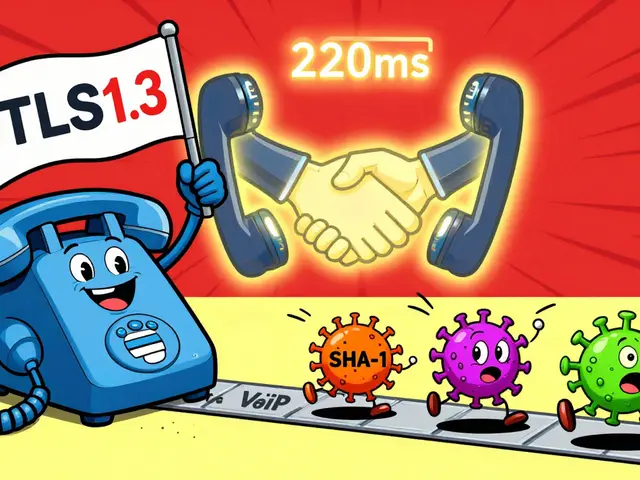
- The Handshake: The oracle pushes this verified data to the smart contract residing on the blockchain.
- Instant Settlement: The smart contract compares the data to the policy parameters. If the condition is met, it automatically transfers the funds-often in the form of stablecoins or digital tokens-directly to the user's digital wallet.
This process happens in seconds or minutes, not months. It eliminates the "claims adjuster" phase entirely, which is where most of the friction and cost in traditional insurance reside.
| Feature | Traditional Insurance | Blockchain Parametric |
|---|---|---|
| Payout Trigger | Proof of physical loss | Predefined data parameter |
| Claim Process | Manual filing & investigation | Automatic via Smart Contracts |
| Settlement Speed | Weeks to Months | Near-Instant |
| Trust Model | Trust in the Insurer/Adjuster | Trust in Code and Oracles |
| Cost Overhead | High (Administrative/Human) | Low (Automated) |

Real-World Use Cases: Beyond the Theory
Where does this actually work in the wild? The most immediate impact is seen in agriculture. Farmers in developing regions often struggle to get traditional insurance because it's too expensive for companies to send adjusters to remote fields to verify crop failure. With parametric insurance, a farmer might pay a tiny monthly fee-sometimes as low as $1 or $2-and receive a payout automatically if satellite data shows a prolonged drought in their zip code. This provides a critical safety net that was previously unavailable.
Travel insurance is another prime target. We've all dealt with the nightmare of claiming a refund for a delayed flight. A blockchain-based policy can monitor flight status APIs in real-time. If your plane is delayed by three hours, the smart contract triggers a payment to your wallet before you've even left the airport lounge. There is no need to save boarding passes or fill out forms.
Then there are large-scale natural disasters. Platforms like the "Parametric Insurance for Natural Disasters" project use Decentralized Insurance models to cover earthquakes and floods. By using satellite weather data, these systems can release funds to thousands of affected people simultaneously. In a crisis, speed is everything; getting money into the hands of survivors in hours rather than months can literally save lives.

Solving the Trust Gap
You might wonder: What if the oracle provides the wrong data? This is a valid concern known as the "oracle problem." To solve this, advanced frameworks use a "multi-source of truth" approach. Instead of relying on one weather station, the smart contract might require agreement from five different reputable data sources. If four out of five agree that the rainfall exceeded 50cm, the payout triggers. This decentralized validation makes it nearly impossible for a single point of failure or a malicious actor to fake a trigger event.
This shift moves the trust from a corporate entity to a transparent system. In the old model, you hope the insurance company is honest and efficient. In the blockchain model, you can actually read the code of the smart contract yourself (or have a third party audit it) to see exactly how the payout is handled. The rules are set in stone before the policy begins, leaving no room for subjective interpretation or "fine print" surprises.
The Path to Mass Adoption
We are seeing a surge in interest from both tech startups and established insurers. Companies like Etherisc are building the infrastructure for these decentralized platforms, proving that parametric models are the "lowest-hanging fruit" for blockchain adoption because they fit the technology's strengths so perfectly.
However, a few hurdles remain. Regulatory frameworks are still catching up to the idea of "code-as-law." Governments need to figure out how to categorize these digital policies and ensure consumer protection. Additionally, while stablecoins make payouts easier, the general public still needs to become more comfortable with digital wallets.
As these pieces fall into place, we can expect parametric insurance to expand into new areas. Imagine insurance for cyber-attacks that pays out the moment a known system breach is verified by security oracles, or energy insurance for companies that get paid when wind turbine output drops below a certain threshold due to low wind speeds. Whenever a risk can be measured by a reliable third-party data point, blockchain can automate the protection.
Does parametric insurance cover the total cost of my loss?
No, it typically doesn't. Unlike traditional indemnity insurance, which aims to reimburse you for the exact amount of damage, parametric insurance pays a predefined sum. For example, if a wind speed of 100 mph triggers a $5,000 payout, you get that amount regardless of whether your actual damage was $2,000 or $10,000. It's designed for speed and liquidity, not a perfect 1:1 reimbursement.
What happens if the data source (oracle) goes offline?
This is why decentralized oracle networks like Chainlink are used. Instead of one data source, the system uses multiple independent nodes. If one goes offline or provides anomalous data, the system ignores it and relies on the consensus of the remaining nodes to ensure the smart contract still triggers correctly.
Is blockchain parametric insurance legal?
It depends on your jurisdiction. Many regions are currently treating these as innovative financial products or "smart contracts." Because they often operate as decentralized platforms, they sometimes exist in a regulatory grey area, but many traditional insurers are now integrating this technology into their official, regulated product lines.
Can I use this for my home insurance?
Currently, it is most common for specialized risks like weather, flight delays, or crop failure. Full home insurance is complex because it involves many variables. However, you could have a parametric "top-up" policy that pays out instantly if a major earthquake hits your city, giving you immediate cash for hotels and food while your traditional insurance handles the long-term home repairs.
How do I actually receive the money?
The payout is sent to a digital wallet address specified in your policy. This is usually in the form of a cryptocurrency or a stablecoin (like USDC) that is pegged to the US Dollar. From there, you can use the funds immediately or convert them back to traditional currency through an exchange.






Donald Sullivan
27 Apr 2026 at 09:22Absolute game changer for flight delays. I'm sick and tired of fighting with airlines for a $200 voucher that only works on Tuesdays in October.