


Why Your VoIP Number Porting Keeps Failing
You’ve filled out the forms, paid the fee, and waited days - but your number still won’t port over. Instead, you get a cryptic code: SIP 404, ISDN 28, or CALL_REJECTED. These aren’t random glitches. They’re standardized rejection codes telling you exactly what went wrong. The problem? Most providers don’t explain them in plain language. And if you don’t know what they mean, you’re stuck in limbo.
Porting a phone number to a new VoIP provider should take 3-7 business days. But according to the North American Portability Management LLC (NAPM), over 22% of requests fail outright. The biggest reason? Misunderstood rejection codes. You’re not alone. Thousands of small businesses and remote teams face this every month. The good news? Almost every rejection has a fix - if you know where to look.
What Are VoIP Porting Rejection Codes?
These codes are standardized error messages generated during the number transfer process. They come from three main sources:
- ISDN Cause Codes - Two-digit numbers like 5, 21, or 28, inherited from old phone network standards.
- SIP Response Codes - Three-digit codes like 403, 404, or 608, used in modern VoIP systems.
- Carrier-Specific Codes - Four-digit internal codes that map back to the standard ones.
These aren’t just tech jargon. Each code points to a specific failure point in the porting workflow. For example, ISDN 28 means your number was formatted wrong. SIP 404 means the system can’t find your number. Knowing the code is half the battle.
Top 5 Rejection Codes and How to Fix Them
1. ISDN 28 - INVALID_NUMBER_FORMAT
This is the #1 cause of porting failures, accounting for over 30% of rejections, according to Simplicity VoIP’s 2024 data.
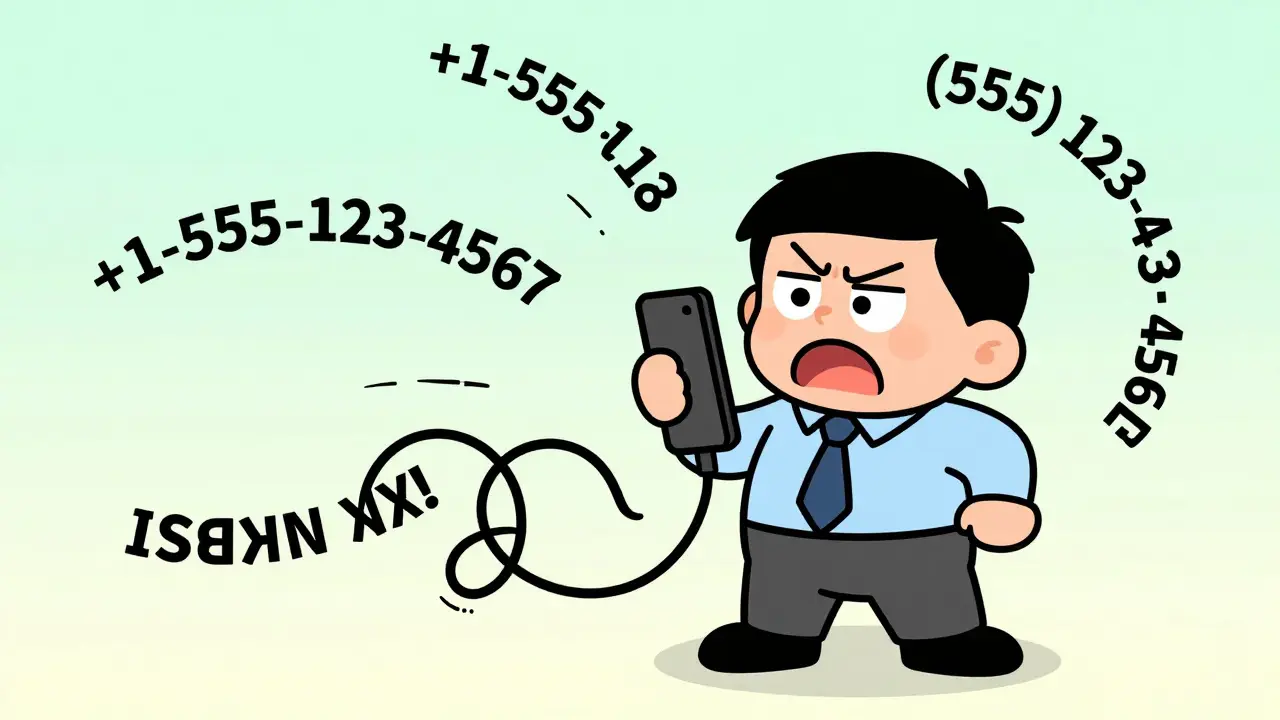
What it means: Your number doesn’t match the E.164 international standard. That’s the format: +1-555-123-4567. No spaces, no dashes, no parentheses, no extra digits.
Common mistakes:
- Adding a leading 1 for U.S. numbers (e.g., 1-555-123-4567 instead of +15551234567)
- Including area code parentheses: (555) 123-4567
- For international numbers, forgetting the country code or adding a leading zero (e.g., 020 7946 0018 for London - should be +442079460018)
Fix: Strip everything except digits and the + sign. Double-check with your current provider’s billing statement. If you’re porting a UK number to a U.S. VoIP service, you must remove the leading zero. Many users miss this - Reddit user u/TelecomTech99 spent three weeks stuck on SIP 404 until they realized the zero was the problem.
2. SIP 404 - Not Found
This code means the receiving carrier can’t locate your number in their system. It’s not always your fault. According to Sigma Telecom, SIP 404 causes 27% of international porting failures.
Causes:
- Wrong tech prefix (e.g., your provider sends “001” instead of “+1”)
- Number not properly registered in the losing carrier’s database
- Route down on the provider’s end - their system can’t reach your number
Fix: Contact your new provider and ask them to verify the number with your old carrier using a Location Routing Number (LRN). Request a Call Detail Record (CDR) showing the exact error. If the number is valid but still rejected, the losing carrier may have a configuration error. Push them to fix it - the FCC requires them to respond within 4 business hours.
3. SIP 403 - Forbidden
This code means the request was blocked. It’s often mistaken for a technical issue, but it’s usually a security or authorization problem.
Why it happens:
- Your number is on a carrier blacklist
- Your IP address isn’t whitelisted
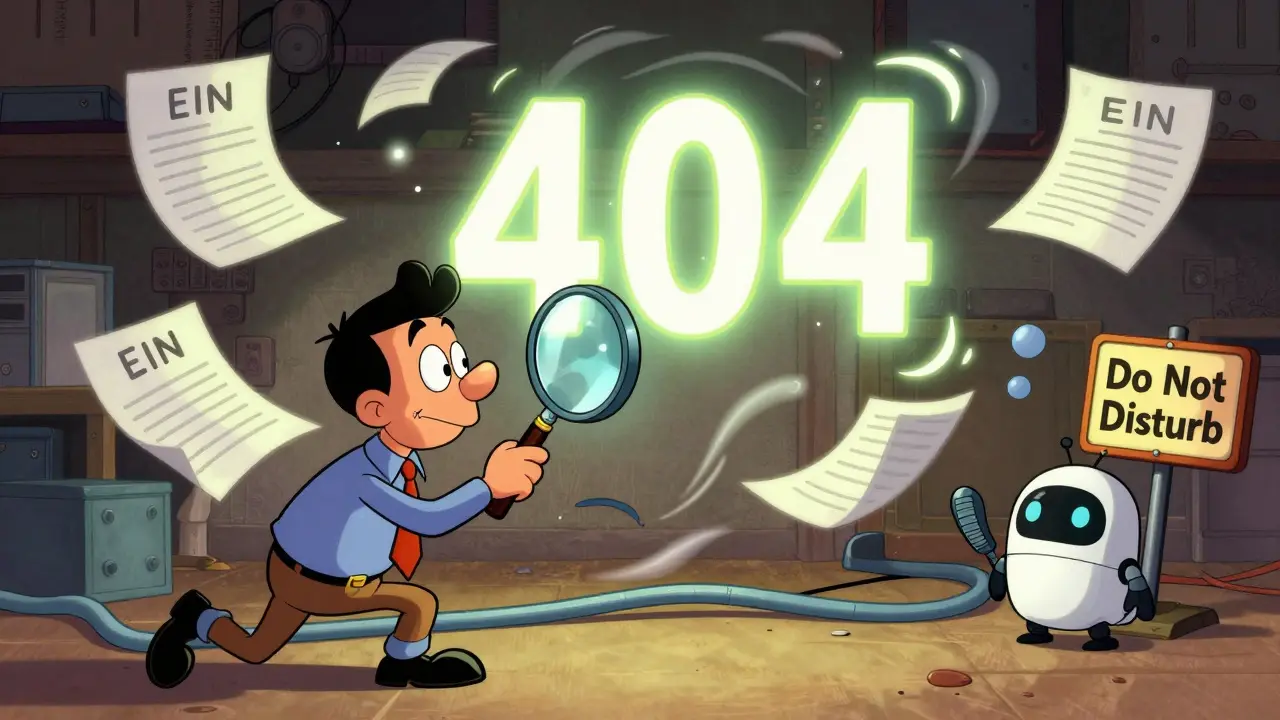
- You’re missing required business documents (EIN letter, bank statement, utility bill)
Fix: Don’t assume your account info is enough. Enterprise users often get hit with this. One Reddit user had five failed attempts with code 21 (CALL_REJECTED) until they submitted their EIN and a recent bank statement. The port completed in 24 hours. Always check your provider’s document checklist - it’s usually buried in their help portal.
4. ISDN 5 - MISDIALED_TRUNK_PREFIX
This one trips up international porting requests. It means someone added an unnecessary trunk prefix - like dialing “1” before a U.S. number when it’s not needed.
Where it shows up: When porting a number from Canada or the U.S. to a European VoIP provider. Some systems auto-add “1” as a trunk code, but international networks don’t expect it.
Fix: Go back to your porting form. Remove any “1”, “00”, or “+” that isn’t part of the official E.164 format. If you’re unsure, copy the number exactly as it appears on your phone bill - not how you dial it.
5. CALL_REJECTED (Code 21)
This is the most generic code. It just says “no.” But it’s often hiding something deeper.
Common hidden causes:
- Number is under a contract with early termination fees
- Do-Not-Disturb (DND) is active on the line
- The losing carrier hasn’t released the number yet
Fix: Call your current provider. Ask them: “Is this number still active? Is there a hold on porting? Is DND enabled?” Some carriers won’t tell you unless you ask. One user found their number had a DND flag set by accident - it was blocking all porting requests.
What You’re Probably Doing Wrong
Most people treat porting like a one-time form fill. It’s not. It’s a process with three hidden traps.
Trap 1: You’re Using the Wrong Number Format
Don’t copy-paste from your phone’s contact list. That’s full of formatting. Don’t use your VoIP app’s display number. Use the raw number from your bill. If you’re unsure, dial *67 + your number - if it rings, the format is wrong. The number must be clean: 10 digits for U.S., 11 with +1, 12 for international.
Trap 2: You’re Ignoring the Losing Carrier
Porting isn’t just about your new provider. Your old one has to release the number. If they don’t update their system, the port fails. Some carriers delay releases on purpose to keep customers. The FCC says they must respond within 4 hours of rejection - but only 63% actually do, according to the 2024 Telecom Compliance Report. If you’re stuck, escalate. Ask for a supervisor. Demand the rejection reason in writing.
Trap 3: You’re Blaming SIP ALG
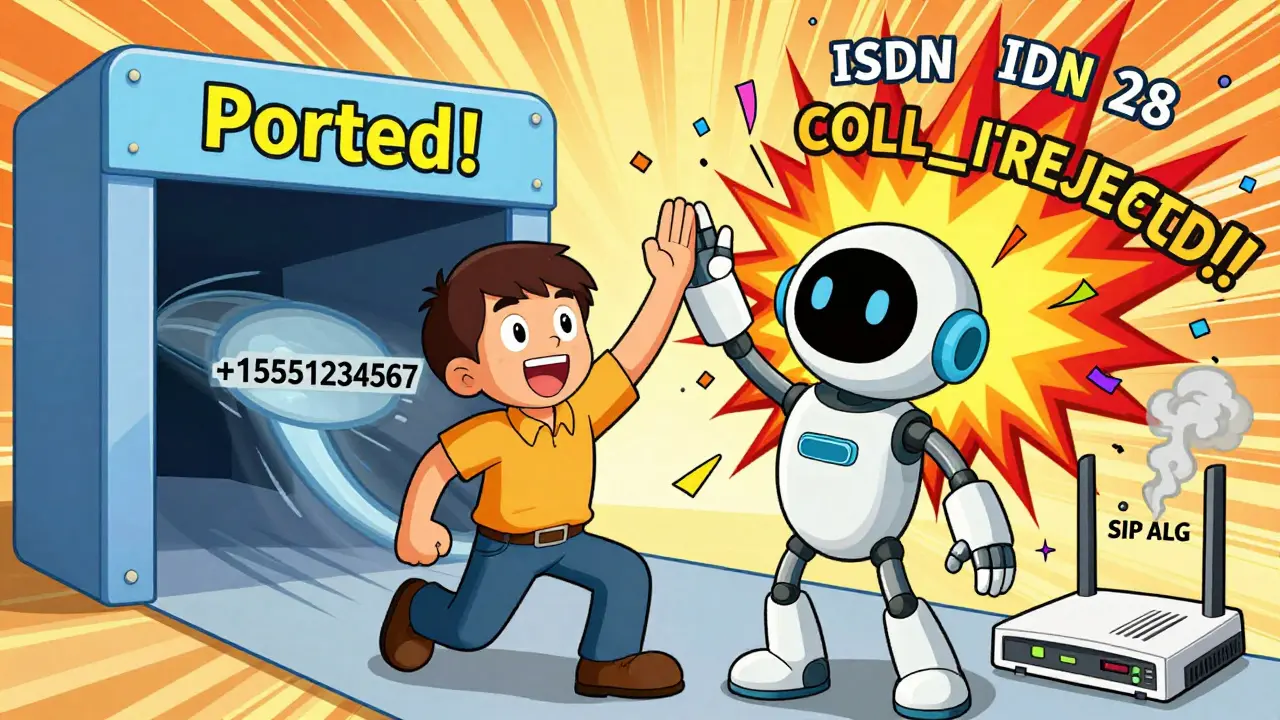
SIP ALG (Application Layer Gateway) is a feature in many home routers that breaks VoIP traffic. It doesn’t cause porting rejections - but it can make your new service fail after the port completes. Users often think the port failed when it’s actually their router. Check your router settings. Disable SIP ALG. Restart the router. Test with a different device. If calls drop after porting, it’s not the port - it’s your network.
How to Avoid Rejections Before They Happen
Prevention beats troubleshooting. Here’s what works:
- Use a number validation tool like Twilio’s Lookup API or Bandwidth.com’s pre-port checker - they catch format errors before you submit.
- Choose a provider with automated validation. RingCentral’s Porting Concierge reduces rejections to 8%. That’s 42% lower than manual systems, per Gartner.
- For businesses: Use a porting management tool. Enterprises with these tools report 35% fewer rejections.
- Always submit your porting request during business hours. Requests submitted after 3 PM ET often get queued until the next day, delaying resolution.
When to Call Support - and What to Say
Don’t wait until you’re frustrated. When you get a rejection code, act fast.
Here’s the script that works:
- “I received rejection code [insert code] on [date].”
- “Here’s the number I’m porting: [full E.164 format].”
- “Can you confirm if the number is active and eligible for porting?”
- “Can you send me the exact reason from your system, not just the code?”
Most support reps won’t know the code. Ask them to escalate to Tier 2 or the porting team. Mention the FCC’s 4-hour response rule. That gets attention.
What’s Changing in 2025
The industry is fixing this mess. In October 2024, 47 major carriers launched the Porting Code Harmonization Initiative to standardize how rejection codes are interpreted across North America. By Q2 2025, you’ll see clearer messages like “Number format invalid” instead of just “ISDN 28.”
AI is also stepping in. 8x8’s machine learning system reduced porting failures by 15.2% in 2024 by predicting errors before submission. By 2026, experts predict rejection rates will drop below 10%.
Final Tip: Don’t Let Fraud Hide Behind Rejection Codes
The FBI reported a 37% jump in port-out fraud in 2024. Criminals sometimes trigger fake rejection codes to trick you into re-submitting your number - then hijack it. Always verify rejection reasons with your current provider directly. Never give out your PIN or account details over email. If something feels off, pause. Call your old provider first.
Porting Isn’t Broken - You Just Need the Right Keys
Every rejection code is a clue, not a dead end. The system works - if you know how to read it. Strip the formatting. Verify the number. Demand clarity. Use tools. And don’t accept “it’s not working” as an answer. You’ve got the power to fix it.






Yashwanth Gouravajjula
16 Dec 2025 at 20:35This is gold. Just ported my number last week using E.164 format - no dashes, no +1, just digits. Took 48 hours. No drama.