



Imagine you are a lone worker at a remote compressor station in West Texas. The wind is howling, the cellular signal has dropped to one bar, and your smartphone app just froze while trying to dial dispatch. In an office setting, this is an annoyance. In the energy sector, it’s a potential life-safety failure. This scenario highlights the critical gap between standard business telephony and the rugged, resilient communications required by VoIP for Energy Companies.
Most people think of Voice over Internet Protocol (VoIP) as a way to save money on long-distance calls. But for oil, gas, and utility companies, it’s not about cost savings-it’s about extending corporate coordination capabilities to substations, drilling sites, pipelines, and refineries without compromising safety. The challenge isn’t just getting voice packets from point A to point B; it’s ensuring those packets arrive when power fails, networks congest, or workers are miles from the nearest cell tower.
The Real Value Beyond Cost Savings
Traditional circuit-switched phones don’t cut it in modern energy operations. They lack integration with SCADA systems, can’t handle mobile workforce dynamics, and offer zero visibility into who is where during an emergency. Modern Enterprise VoIP architectures combine SIP-based telephony, cloud Unified Communications as a Service (UCaaS), softphones, and ruggedized mobile devices to create a unified communication fabric.
This fabric allows control rooms to see exactly which crew member is available, record every dispatch call for compliance, and integrate voice data directly with operational technology (OT). For example, Hitachi Energy deployed a SIP client on handheld devices in the Eagle Ford oil field, allowing mobile workers to access the corporate voice network even when other communications failed. The result wasn’t just better chat; it was faster help requests during emergencies.
However, a crucial distinction exists: ordinary cloud VoIP is not a certified life-safety system. While Microsoft Teams Phone or Zoom Phone might handle routine office chatter perfectly, they often lack the deterministic reliability needed for hazardous environments. The goal is hybrid resilience-using IP networks for efficiency but retaining independent radio or satellite fallbacks for critical moments.
Safety Functions That Save Lives
In the field, features like "call recording" aren’t just for quality assurance-they’re legal evidence and training tools. More importantly, specific safety functions transform a phone into a lifeline. These include:
- One-Button Emergency Calling: Instantly alerts dispatch with location data.
- Lone-Worker Timers: Triggers an alarm if a worker doesn’t check in within a set timeframe.
- Man-Down/Fall Alerts: Uses accelerometer data to detect if a worker has collapsed.
- Priority Interrupt: Allows dispatch to break into any ongoing call for urgent instructions.
- Group Calling: Enables instant broadcast to entire crews without individual dialing.
These capabilities are more commonly found in industrial land-mobile-radio (LMR) systems integrated with IP gateways than in generic office UCaaS platforms. Motorola Solutions, for instance, documents cases where IP Site Connect linked pressure-control stations along gas pipelines to operations rooms, using ATEX-certified radios for potentially explosive areas. Their Indonesian oil-and-gas case reported a customer-estimated 50% improvement in safety response times due to encrypted voice, secure authentication, and remote device disabling.
Yet, software alone isn’t enough. You cannot carry a standard iPhone into a classified hazardous area simply because it runs a VoIP app. ATEX-certified devices are mandatory where explosive atmospheres may exist. These intrinsically safe endpoints prevent sparks that could ignite flammable gases. If your VoIP solution relies on non-certified Wi-Fi handsets in Zone 1 or Zone 2 areas, you have a compliance violation waiting to happen.
Architecture and Performance Engineering
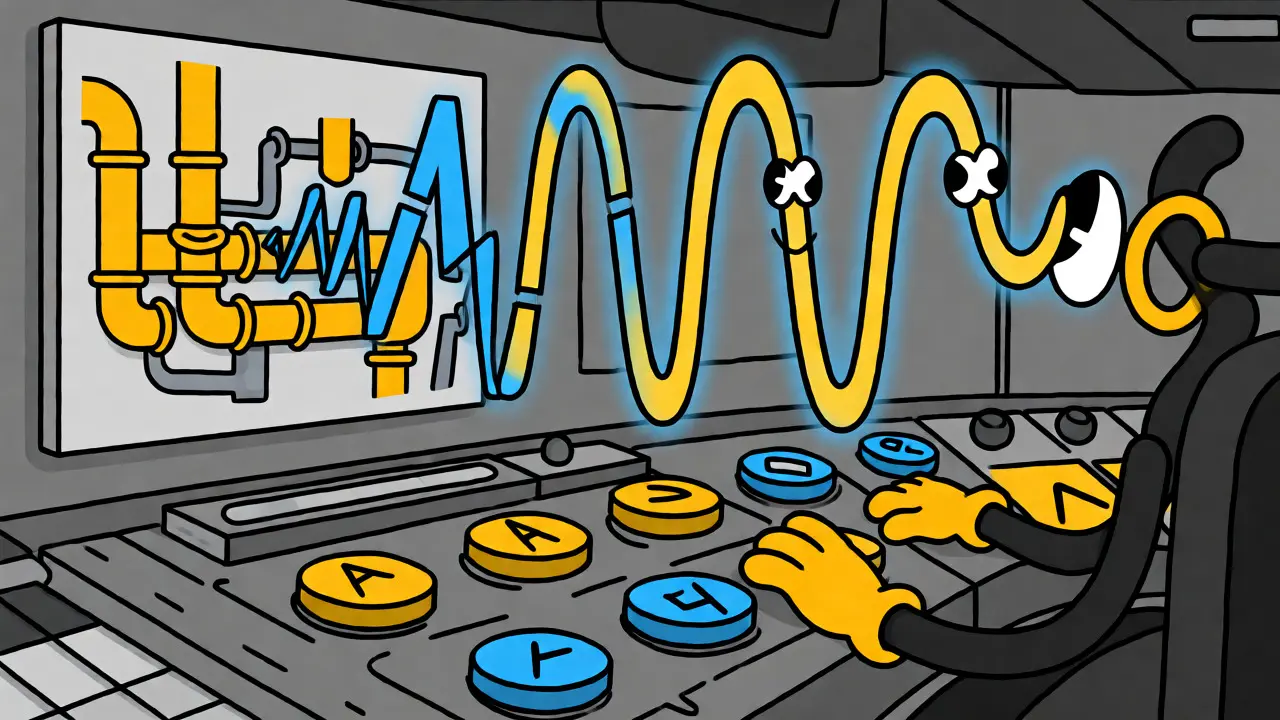
Voice quality in energy fields must be engineered, not assumed. Satellite links, congested cellular networks, and weak site Wi-Fi introduce latency, jitter, and packet loss that turn clear speech into robotic gibberish. ITU-T G.114 guidelines suggest no more than 150 milliseconds of one-way delay for high-quality conversational voice. Practitioners often target stricter metrics: 130 ms or less for recommended latency, 20 ms or less for jitter, and a Mean Opinion Score (MOS) of at least 4.2 for G.711 codecs.
| Metric | Recommended Target | Acceptable Limit | Impact of Failure |
|---|---|---|---|
| One-Way Latency | ≤ 130 ms | ≤ 150 ms | Conversational overlap, confusion |
| Jitter | ≤ 20 ms | ≤ 40 ms | Audio clipping, robotic tone |
| Packet Loss | 0% | ≤ 1% | Gaps in speech, missed words |
| MOS (G.711) | ≥ 4.2 | ≥ 4.0 | Poor intelligibility, user frustration |
To meet these targets, robust architecture is key. Network segmentation via VLANs or VRFs separates voice traffic from SCADA and enterprise data. Quality of Service (QoS) prioritization ensures voice packets jump the queue during congestion. Local survivable gateways keep calls running locally if the WAN link drops-a common occurrence during storms or fiber cuts. Redundant paths, such as dual-carrier cellular bonding or satellite backup, provide additional insurance.
Security cannot be an afterthought. The U.S. Department of Energy warns that moving from non-routable TDM technologies to routed IP creates new NERC CIP compliance obligations. Encryption is non-negotiable: TLS for signaling and SRTP for media protect against eavesdropping. Identity management, certificate lifecycle controls, and anomaly detection are essential, especially as third-party telecommunications networks increasingly intersect with critical infrastructure.
Emergency Calling and Regulatory Compliance
Here is where many deployments fail: E-911 location accuracy. Kari’s Law requires direct 911 dialing without prefix codes. RAY BAUM’s Act Section 506 mandates dispatchable location for all multi-line telephone systems, including interconnected VoIP. For a fixed office desk, this is easy. For a roaming field worker on a pipeline, it’s complex.
A cloud provider’s generic E-911 feature often registers the company’s headquarters address, not the worker’s actual location. If a worker dials 911 from a well pad in North Dakota, the dispatcher needs precise coordinates, not a New York billing address. Energy companies must map locations at granular levels-building, floor, room, well pad, substation-and maintain dynamic updates as devices move. Automated location services via GPS or Wi-Fi triangulation are ideal, but they require integration with the VoIP platform and regular testing.
FCC rules state that non-fixed interconnected VoIP may use registered location or alternative information if automated dispatchable location is technically infeasible. However, "technically infeasible" is a high bar. Best practice involves maintaining non-VoIP emergency alternatives, such as hardwired phones or satellite terminals, in areas where IP connectivity is unreliable.

Provider Selection and Hybrid Strategies
Choosing a provider depends on existing infrastructure and specific needs. Here’s how major players stack up for energy sectors:
- Microsoft Teams Phone: Ideal if you already use Microsoft 365. Pricing starts around $8-$10 per user/month. It integrates seamlessly with Entra ID and compliance tools but may lack native industrial hardware support.
- Zoom Phone: Strong choice if Zoom Meetings dominates your collaboration stack. Metered plans start near $10.50/user/month. Good performance but similar limitations regarding rugged hardware.
- RingCentral MVP: Offers broad standalone UC capabilities and extensive integrations. Enterprise pricing hovers around $20-$35/user/month. Suitable for distributed organizations willing to manage a feature-rich system.
- Private IP-PBX/SIP: Provides maximum control and local survivability. Requires specialist administration but avoids cloud dependency risks.
No single platform solves everything. The most effective strategy is hybrid. Use enterprise VoIP for routine office-to-field communication and collaboration. Retain independent, certified radio or satellite systems for mission-critical, life-safety communications. Integrate them via gateways so dispatchers can reach both systems from a single console.
Implementation Checklist for Success
Don’t buy licenses before you test the ground. Start with a communications hazard analysis. Inventory every field site, classify hazardous areas, and identify lone-worker scenarios. Measure latency, jitter, and packet loss at representative times-during shift changes, storms, and peak network usage.
Pilot at three distinct locations: one office, one remote station, and one difficult site (e.g., underground mine or offshore rig). Validate ATEX/IECEx device compatibility. Train workers on emergency buttons and fallback procedures. Conduct recurring drills to test failover during simulated power and WAN outages.
Finally, document everything. Define maximum tolerable outage times. Establish acceptance criteria based on MOS scores and emergency call routing tests. Remember, in energy operations, a choppy phone call is no better than no phone call at all.
Is cloud VoIP reliable enough for emergency calls in remote energy fields?
Cloud VoIP alone is often insufficient for guaranteed emergency reliability in remote fields due to dependencies on WAN links, power, and cellular coverage. A hybrid approach using local survivable gateways and independent radio/satellite fallbacks is recommended for life-safety scenarios.
Do I need special hardware for VoIP in hazardous areas?
Yes. Standard smartphones and Wi-Fi handsets are not safe for Class I Division 1 or 2 hazardous areas. You must use ATEX or IECEx-certified intrinsically safe devices to prevent ignition of flammable gases or dust.
How does VoIP affect NERC CIP compliance?
Moving voice to IP networks brings it under the scope of NERC CIP standards, particularly regarding cybersecurity, access control, and configuration management. Third-party telecom networks used for SCADA may fall outside some CIP protections, requiring careful architectural review.
What are the key metrics for measuring VoIP quality in the field?
Key metrics include one-way latency (target ≤ 150 ms), jitter (target ≤ 20-40 ms), packet loss (target ≤ 1%), and Mean Opinion Score (MOS) (target ≥ 4.0). These ensure voice remains intelligible during critical operations.
Can VoIP replace traditional two-way radios completely?
Not entirely. While VoIP offers superior features like recording and location tracking, traditional LMR radios often provide faster push-to-talk initiation and better range in dead zones. Most energy companies adopt a hybrid model integrating both.





Write a comment